


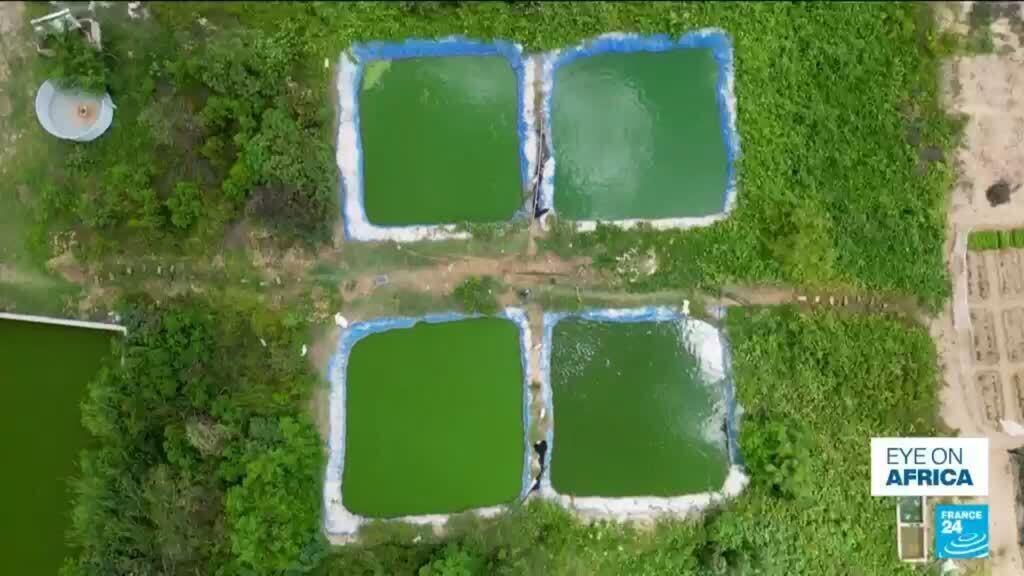
Senegal farmers turn to fish and rice farming
Senegal Farmers Revive Ancient Rice-Fish Technique to Boost Yields, Cut Pests and Fight Disease Amid Climate Pressures
Lampsar / Senegal River Valley, Northern Senegal — In the sun-baked paddies of northern Senegal, just south of the Senegal River and roughly 160 kilometres from the Sahara, farmers are turning to an age-old practice with modern urgency: raising fish alongside their rice. This climate-smart approach is delivering higher harvests, natural fertiliser, fewer pests, extra income and even a potential reduction in a debilitating parasitic disease, as communities adapt to mounting environmental and economic pressures.
The technique, known as rice-fish co-culture or rizipisciculture, involves introducing native fish species into flooded rice fields. Nile tilapia (Oreochromis niloticus) primarily fertilise the soil through their waste, while African bonytongue (Heterotis niloticus, known locally as ndiéguel) prey on snails and insects. Farmers dig simple water ditches or trenches in or around the paddies to give the fish refuge from heat and predators. The fish require little or no supplemental feed at low densities and thrive on natural resources already present in the fields.
A pioneering study published in Nature Sustainability in May 2026, involving data from 405 households in the Senegal River Valley, found that children in rice-farming families faced higher rates of schistosomiasis (bilharzia) infection than non-farming peers. Schistosomiasis, transmitted by freshwater snails that thrive in irrigated paddies, affects millions across Africa and can cause chronic illness, reduced school attendance and lost productivity, reinforcing cycles of poverty.

Researchers from Stanford University and Senegalese partners, including the Station d’Innovation Aquacole in Saint-Louis and Université Gaston Berger, introduced the two native fish species into paddies. The results were striking: fish suppressed snail and insect populations, improved soil nutrients, and boosted rice yields by more than 25 percent. Net economic benefits ranged from US$1,805 to US$3,415 per hectare per year, with a benefit-to-cost ratio of 7.42. The initial trench investment of about US$1,000 per hectare was typically recovered in the first year.

Farmers on the ground report tangible changes. Moussa Ndiaye, watching a combine harvest his paddy near Lampsar, noted strong yields of both grain and fish. Before the intervention, some farmers sold around 60 bags of rice per field; afterwards, figures rose to 80–100 bags. Abdoulaye Diop, 62, observed that fields with fish stayed “consistently greener” thanks to the natural fertiliser. Abou Diallo described the extra income as life-changing. Senegal still imports roughly half the rice it consumes, so higher local production carries national significance. Rice and fish form the heart of the national dish, thieboudienne, making the combination culturally resonant.
The approach is low-input and scalable. Researchers have expanded trials to around 60 fields, with local hatcheries supplying fingerlings. Training covers husbandry, harvest and marketing. Beyond fertiliser and pest control, the system reduces reliance on synthetic chemicals and supports better water-use efficiency in a region heavily dependent on irrigation infrastructure. It also adds high-quality protein to household diets.
This is not entirely new. Integrated rice-fish systems have deep roots in Asia and have been tested across Africa. In Senegal’s Senegal River Valley, the practice is gaining renewed attention precisely because of intensifying climate pressures: erratic rainfall, rising temperatures, soil degradation and the dual challenge of food insecurity and water-borne disease. The same irrigation canals that make intensive rice farming possible also create ideal habitats for disease-carrying snails. By turning the paddies into multi-functional systems, farmers address several problems at once.
Challenges remain. Success depends on reliable water control, suitable rice varieties, access to quality fingerlings, and local markets for the fish. Not every paddy is suitable, and technical support is essential for wider adoption. Still, the evidence from northern Senegal shows a rare multi-win: higher agricultural productivity, diversified incomes, improved nutrition, reduced chemical inputs, and lower disease transmission risk.
As climate pressures intensify across the Sahel, this climate-smart revival of an ancient technique offers a practical, locally grounded path forward. Farmers, researchers and development partners are watching closely as the model scales, hoping it can help Senegal strengthen food sovereignty while protecting both people and the environment.

Tigray: 20,000 university students relocated by conflict

‘Pragmatic international relations’: Sánchez seeks to avoid ‘further conflict with Rabat’

Tunisia water crisis deepens as temperatures approach 50°C
IMF reaches historical loan agreement with Senegal

Kenya shifts to electric cars as fuel prices soar 50%
Illegal mining ravages Johannesburg neighbourhoods
Military buildup seen in Ethiopia near Sudanese border
Ghana cocoa farmers reject new ‘punitive’ land conversion law