

Tunisian duo turns centuries-old spiritual chants into a contemporary sound experience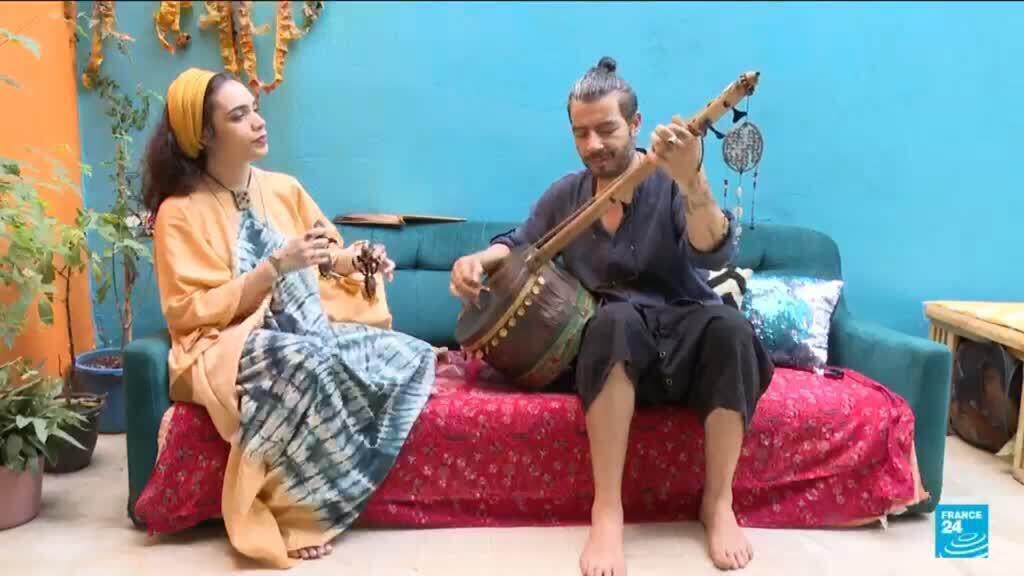
Golden Page News | AFRICA | 14 October 2026
TUNIS, Tunisia — A Tunisian musical duo is creating a distinctive meeting point between centuries-old spiritual traditions and contemporary electronic music, bringing the country’s Sufi musical heritage to new audiences at home and abroad.
Known as Jathb, the project brings together singer-composer Mariem Hamrouni and producer-composer Mohamed Barsaoui. Since its creation in September 2021, the duo has developed a musical language that combines Tunisian Hadhra and Sufi texts with electronic, ethno-folk and atmospheric sounds.
Rather than treating traditional music as something confined to the past, Jathb uses modern production to give these spiritual traditions a contemporary setting. Their work draws on oral traditions and texts in Tunisian Arabic, including songs associated with saints and spiritual figures who have played an important role in Tunisia’s cultural memory.

Where Sufi tradition meets electronic sound
The name Jathb, meaning attraction, reflects the project’s interest in the emotional and spiritual power of music. The duo’s approach is built around voice, repetition, rhythm and electronic soundscapes, creating music that can feel both rooted in North African tradition and unmistakably contemporary.

Their album Willia Vol. 1, released in March 2024, presents this approach through tracks including Fares Baghdad, Faza3 Jiddi, Allah Hay, Sana3, Weld el 3arem and Ya Chrif. The duo describes the project as a journey through North African Sufi culture, using trance-like sounds and spiritual music to encourage reflection and an inward experience.
The recordings also demonstrate Jathb’s willingness to work beyond a conventional two-person studio format. Their published credits include contributions from guitarist and bassist Walter Vega, synthesist Selim Arjoun and mixing and mastering engineer Aymen Baccar.
Preserving heritage without freezing it in time
For Jathb, the electronic element is not simply an attempt to modernise traditional music for commercial purposes. It is part of a broader effort to keep cultural memory active.
Tunisian Hadhra has deep connections to spiritual practice, devotional singing and communal musical traditions. By placing traditional texts and vocal styles within contemporary arrangements, Jathb is creating a new route through which younger listeners and international audiences can encounter elements of Tunisia’s spiritual heritage.
Their music therefore sits between preservation and experimentation: the traditional material provides the cultural foundation, while electronic production creates room for reinterpretation.
A contemporary tribute to Abu Al-Hassan Al-Shadhili. The duo’s latest work demonstrates how directly it continues to engage with Tunisia’s spiritual history.
In October 2026, Jathb released “Ya Belhssan”, a piece from its Heritage of Hadhra project and part of the latest album WILLIA Rebirth.
The track is presented as a musical tribute to Abu Al-Hassan Al-Shadhili, the Sufi saint whose spiritual legacy is deeply embedded in Tunisian religious and cultural memory. Jathb describes the song as a contemporary reading of that heritage, bringing together memory, voice, rhythm and experimentation.
The release illustrates the central philosophy behind the project: looking backwards for inspiration while using modern musical language to speak to the present.
From Tunisia to a wider audience
Jathb’s catalogue extends beyond its Sufi-electronic recordings. The duo also produced the soundtrack for the film Éna, released in 2024, featuring pieces such as I Am Here, Neutrality, Rebirth, Exorcism and Unchained Bird. The soundtrack continues the group’s combination of folk, electronic, ethno and spiritual influences.
The project’s growing catalogue demonstrates the possibilities of using contemporary music as a form of cultural transmission. Instead of reproducing traditional material exactly as it was performed generations ago, Jathb asks what happens when those voices, rhythms and spiritual texts are allowed to enter a new sonic environment.
That question has become increasingly important as artists across Africa explore ways to connect traditional cultural expressions with global contemporary music.
A bridge between memory and the future. Jathb’s music ultimately represents more than a fusion of genres. It is an experiment in cultural continuity.
The duo’s work suggests that preserving heritage does not necessarily mean keeping it unchanged. Traditional chants, spiritual poetry and oral histories can remain culturally meaningful while being interpreted through new technologies, new production techniques and new artistic perspectives.
For Tunisia, a country with a rich and diverse musical heritage, Jathb offers one example of how the sounds of the past can be carried into the future without completely losing their identity.
Through electronic beats, atmospheric soundscapes and the enduring power of the human voice, Jathb is turning Tunisia’s Sufi musical memory into a contemporary sonic journey — one capable of travelling well beyond its original cultural setting.