


Golden Page News | september
Paris — French President Emmanuel Macron today welcomed Lebanese President Joseph Aoun and Jordan’s King Abdullah II to Paris for high-level talks focused on bolstering Lebanon’s security institutions and preventing a potential security vacuum in southern Lebanon as the United Nations Interim Force in Lebanon (UNIFIL) approaches the end of its mandate.

The leaders met first in bilateral and trilateral sessions before opening a broader operational meeting of military chiefs at Les Invalides.
The gathering, held under the Aqaba Process framework initiated by King Abdullah, brought together defence chiefs from Lebanon, Jordan, France, Britain and Italy, along with senior officials from the United States and Saudi Arabia. The discussions centred on assessing the practical needs of the cash-strapped Lebanese Armed Forces (LAF) and Internal Security Forces, and exploring options for an international presence to succeed UNIFIL.
UNIFIL’s mandate, which has operated in southern Lebanon for nearly five decades since Israel’s 1978 invasion, is scheduled to end on December 31, 2026, following a UN Security Council decision last year. France and Italy have advocated for a multinational coalition or European-led mission to support the Lebanese army after the peacekeepers’ departure, emphasising training, equipment, intelligence sharing and mentoring rather than replacing Lebanese forces.

Lebanese President Aoun has publicly stated that Beirut seeks a new international force—European or otherwise—to avoid a security vacuum along the border with Israel. In bilateral talks at the Élysée Palace earlier in the day, Macron and Aoun reviewed progress on proposals for the UN Security Council concerning the future international presence in southern Lebanon.

They also addressed ongoing Israeli strikes on Lebanese villages and towns, and efforts to halt them within the framework of Lebanese-US-Israeli negotiations and a June framework agreement that envisions a phased Israeli withdrawal, the extension of Lebanese state authority, and security arrangements along the border. Aoun thanked Macron for France’s continued support for Lebanon’s sovereignty and its security institutions.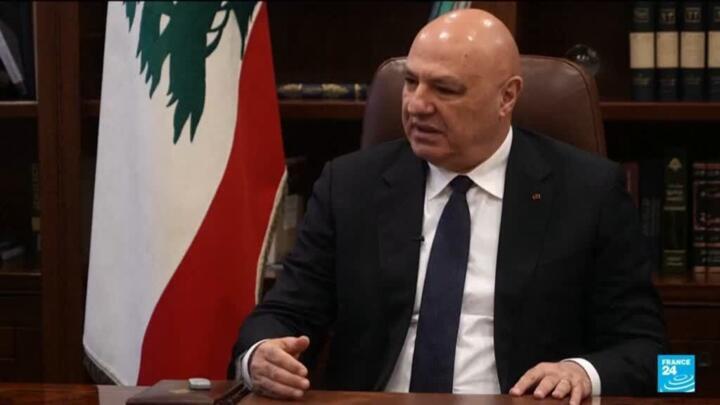
Macron later described a sovereign and stable Lebanon as “a decisive step toward peace and stability for the entire region” and “hope reborn for the entire Middle East.” In a statement, he stressed that France, working closely with Jordan, the United States, Saudi Arabia and other partners, supports the Lebanese Armed Forces as “indispensable” for asserting the authority of the Lebanese state across its territory. He also highlighted the need for diplomacy to end escalating regional tensions.
President Aoun used the occasion to call for a joint regional security strategy grounded in shared energy projects and deeper economic, security and political cooperation. The leaders discussed the broader regional situation, including developments in Gaza, the West Bank and Jerusalem, and underscored the interconnected nature of Middle East security. France has made clear that substantial international assistance—financial, equipment or training—will depend on a clear, credible and realistic Lebanese military deployment plan, with operational details to be clarified through the day’s technical discussions.
The Paris meeting serves as a preparatory step toward a larger international conference to mobilise concrete support for the Lebanese army and security forces, which have long struggled with limited resources while facing the dual challenges of extending state control in the south and implementing commitments related to weapons and reforms. Israeli military activity in southern Lebanon continues, heightening concerns about who will secure the border once UNIFIL begins its drawdown in early 2027.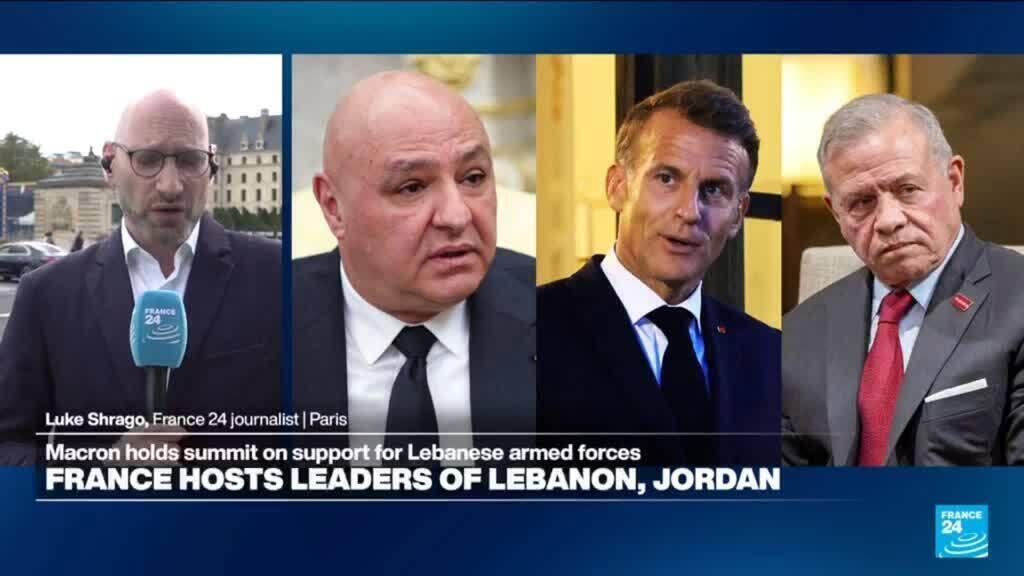
Officials hope the day’s talks will produce a practical assessment of the Lebanese forces’ requirements and lay the groundwork for coordinated international action ahead of the UN General Assembly next week, where Lebanon is expected to feature prominently on the agenda. France remains committed to preventing a security vacuum and reinforcing Lebanese sovereignty at a critical juncture for the country and the wider region.

Lebanon: Macron, Aoun and King Abdullah II hold security talks in Paris

Middle East : Trump plans $2.8bn arms package for Israel amid Gaza war

Ed Sheeran’s tour in trouble after opening acts drop out in solidarity with rapper Macklemore
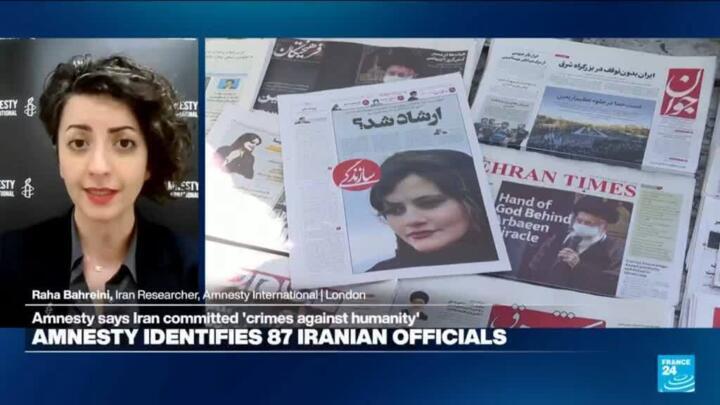
Amnesty says Iran committed ‘crimes against humanity’ in protests crackdown

Saudi Arabia accuses Houthis of targeting Mecca, warns of ‘red line’

Washington set to approve $2.8 bn arms package for Israel

Saudi crown prince seeks neighbours’ backing as Houthi attacks rattle Red Sea oil routes