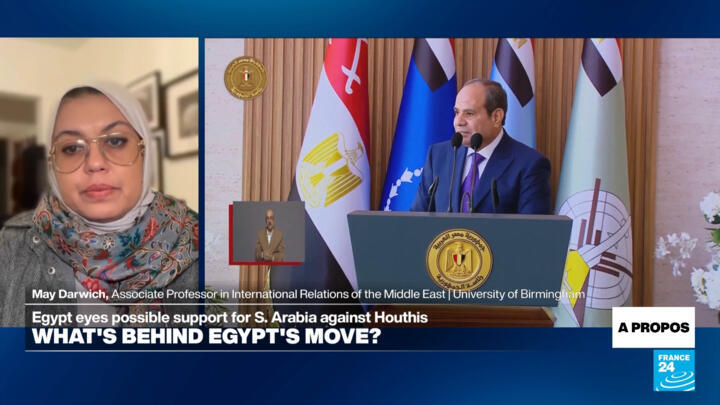


Israel: Could Arab parties play kingmaker in the next Knesset ?
Golden Page News October 24,
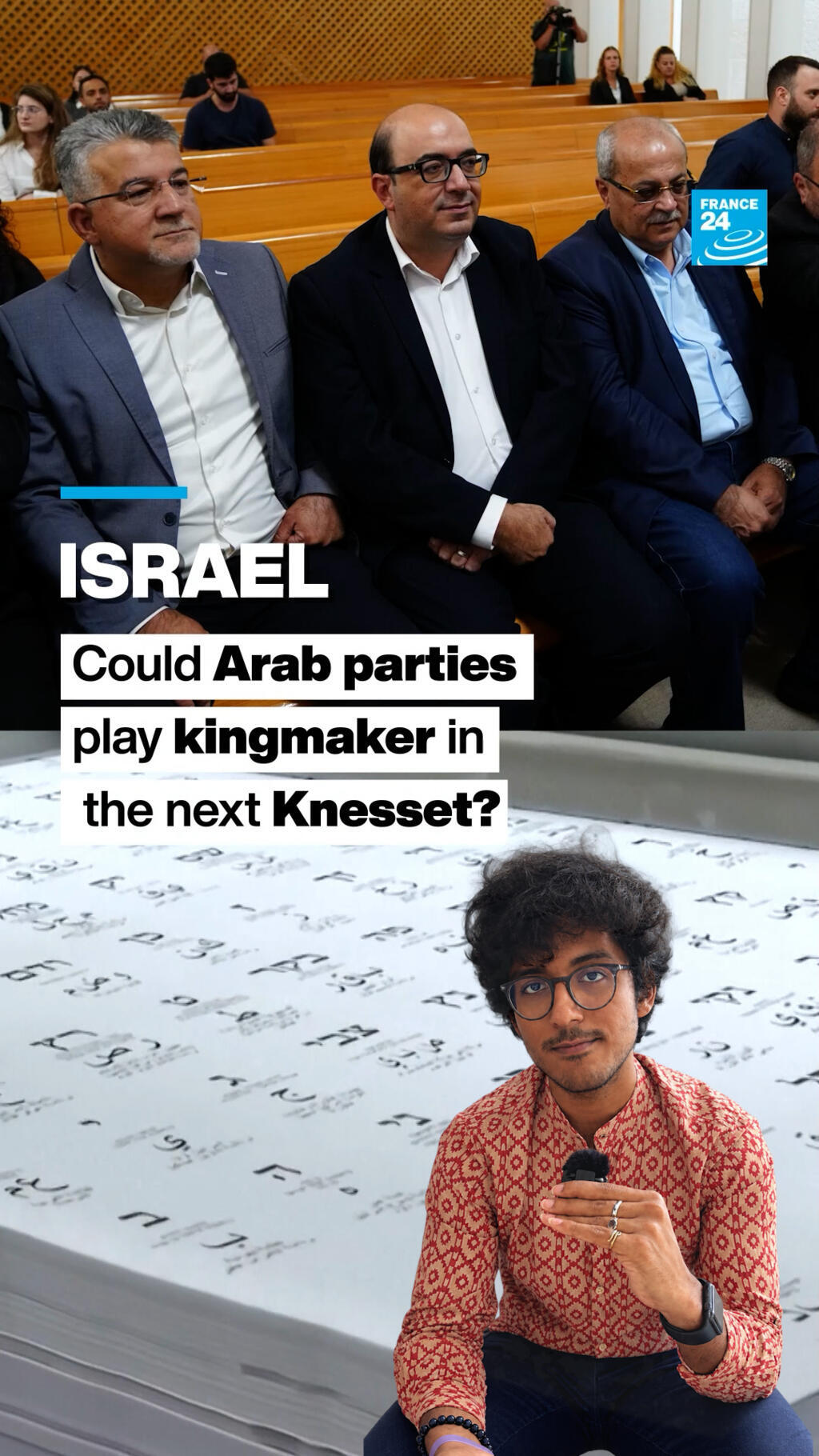
Israel Goes to the Polls: Why Arab Parties Could Decide Netanyahu’s Political Future
First election since the October 7 attacks puts Netanyahu and former army chief Gadi Eisenkot in a battle neither side appears able to win alone
JERUSALEM — Israel is heading into one of the most consequential elections in its recent history, with voters preparing to choose a new 120-member Knesset on October 27, 2026 — the country’s first national election since the Hamas-led October 7, 2023 attack and the wars that followed.
But while the contest is being presented largely as a battle between Prime Minister Benjamin Netanyahu and former Israel Defense Forces Chief of Staff Gadi Eisenkot, the election may ultimately be decided by parties neither man leads.
Israel’s Arab parties could hold the balance.

The latest polling suggests neither Netanyahu’s right-wing and religious bloc nor the opposition bloc led by Eisenkot’s Yashar party is close to the 61 seats required to form a government.

That means the question after October 27 may not simply be Who won the most seats?
It may be:
Who can find 61 lawmakers willing to support a government?
And that is where Israel’s Arab political parties enter the story.
A country voting after three years of war
This election comes after one of the most traumatic periods in Israel’s modern history.
The October 7, 2023 Hamas attack shattered Israel’s sense of security and was followed by a prolonged war in Gaza, conflict involving Lebanon and direct military confrontations with Iran.
Netanyahu was prime minister when the October 7 attack occurred and has remained at the centre of the political debate over Israel’s security, military strategy and international position.
His supporters argue that his government has demonstrated Israel’s military strength and successfully confronted Hamas, Hezbollah and Iran.
His critics ask a different question:
Who bears responsibility for the failures that allowed October 7 to happen?
That question has never completely disappeared from Israeli politics.
A state commission of inquiry into the events surrounding the attack is among the issues that opposition parties want addressed.
The election therefore carries the character of a referendum on Netanyahu — but it is not exclusively about him.
Voters are also considering military service for ultra-Orthodox Jews, the cost of living, relations with the United States, Israel’s international standing, the future of the war and the country’s relationship with the Palestinians.
Netanyahu versus Eisenkot
Netanyahu remains Israel’s longest-serving prime minister and is seeking another political mandate through his Likud party.
But the strongest challenger to his political dominance is no longer another veteran politician.
It is a former soldier.
Gadi Eisenkot, former Chief of Staff of the Israel Defense Forces, leads the relatively new Yashar party.
His security credentials are central to his campaign.
Eisenkot served as IDF chief from 2015 to 2019 and subsequently entered national politics. His personal connection to the war is also profound: his son, Gal, was killed during fighting in Gaza in December 2023.
That history gives Eisenkot a particular political profile.
He is challenging Netanyahu on security without presenting himself as someone detached from Israel’s military establishment.
Recent polling has generally placed Yashar ahead of Likud, with Yashar in the low 20s and Likud around 20 seats.
But winning more seats than Netanyahu is not enough.
Eisenkot needs partners.
The magic number: 61
Israel’s Knesset has 120 seats.
A government needs the support of at least 61 lawmakers.
No single party has ever won an outright majority in the Knesset, meaning coalition-building is an unavoidable feature of Israeli politics.
The latest polls underline the difficulty.
One Channel 12 survey put Yashar at 23 seats and Likud at 21, while Netanyahu’s broader bloc was projected at 50 seats.
The opposition/change bloc was projected at 56 seats before counting Arab parties separately.
Another poll by public broadcaster KAN put Yashar at 22 seats and Likud at 20, with Netanyahu’s bloc again around 50.
The Arab parties were projected to win roughly 14 seats across the different surveys.
The numbers explain why the campaign has become more complicated than a simple Netanyahu-versus-Eisenkot contest.
If Netanyahu’s allies reach only around 50 seats, they need additional support.
If Eisenkot’s bloc reaches somewhere in the low-to-mid 50s, it also needs additional support.
And some of those missing seats could belong to Arab-led parties.
Why Arab voters matter
Arab citizens make up roughly 21 percent of Israel’s population.
Their political parties have historically occupied a complicated position within Israeli politics.
They have often been treated as an important voting constituency while simultaneously being kept outside the traditional Jewish-majority coalition framework.
This election could force that political contradiction into the open.
Reuters reports that Arab voter turnout could have a significant effect on the coalition arithmetic, with polling suggesting higher turnout than in previous elections. One estimate put expected Arab turnout at around 63 percent, compared with 56 percent in 2022.
That is potentially significant.
A few percentage points of additional turnout can translate into several Knesset seats.
And several seats can determine whether a government exists.
Mansour Abbas and the possibility of another political breakthrough
One of the most important figures to watch is Mansour Abbas, leader of the Arab-led United Arab List (Ra’am).
Abbas is not new to the question of whether an Arab party can influence Israeli national government.
In 2021, Ra’am became the first independent Arab party to join an Israeli governing coalition, helping Naftali Bennett and later Yair Lapid form governments that removed Netanyahu from office for a period.
Abbas is again arguing that Arab citizens should participate strongly in the election.
His message is pragmatic: Arab voters should not simply watch Israeli politics from the sidelines; they should use their votes to influence the government that governs them.
Reuters quoted Abbas as arguing that Arab voters could help create a government of change and address issues including security, settlement expansion and violence affecting Arab communities.
But there is a major obstacle.
Eisenkot has ruled out aligning himself with Arab parties.
He has cited fundamental disagreements, including their positions on Hamas.
That creates an extraordinary political paradox.
Eisenkot may need Arab support mathematically while simultaneously refusing the kind of formal political alliance that could provide it.
Could Arab parties support a government from outside?
This is where Israeli coalition politics becomes particularly interesting.
Arab parties do not necessarily have to enter a government to influence whether it survives.
They could potentially provide external parliamentary support on specific issues or on a confidence vote without becoming full members of the governing coalition.
That possibility has already been discussed by Arab political leaders.
Joint List leader Ahmad Tibi has indicated that Arab lawmakers could support an Eisenkot-led government from outside on issues they consider important, including the establishment of an official commission of inquiry into October 7.
In other words, the post-election negotiations could produce an arrangement in which Arab lawmakers help keep a government alive without formally becoming part of it.
But even that would require enormous political compromises.
The Arab vote is not one vote
It is also important not to treat Israel’s Arab citizens as a single political bloc.
Arab-led parties have different ideologies and different approaches to the Israeli state, Palestinian issues, security, economic policy and coalition participation.
Some may be more willing to cooperate with Jewish-majority parties.
Others may prefer to remain in opposition while using their Knesset seats to influence legislation.
That diversity makes the post-election arithmetic even more difficult.
And it means that saying “the Arab parties will decide the election” may be too simplistic.
A more accurate description is:
Arab parties could become indispensable to the formation of a government if the major blocs remain where the polls currently place them.
Netanyahu’s own coalition has problems
Netanyahu’s challenge is not simply the strength of Eisenkot.
His existing coalition contains parties with competing interests.
Ultra-Orthodox parties have traditionally demanded protection from mandatory military service, while secular and many reservist groups increasingly oppose exemptions.
The issue has become particularly sensitive after years of war and heavy military mobilisation.
Far-right parties also exert considerable influence over Netanyahu’s coalition and have their own positions on the Palestinian territories, settlements and the conduct of the war.
Keeping such a coalition together after an election may prove as difficult as winning the seats in the first place.
And what happens if nobody reaches 61?
This is perhaps the biggest question hanging over October 27.
Israel has experienced repeated elections and prolonged coalition deadlocks in recent years.
If neither side can assemble a governing majority, several possibilities emerge.
There could be difficult coalition negotiations.
A minority government could theoretically emerge with outside support.
Rival parties could attempt to negotiate a broad unity government.
Or, if no viable government can be formed, Israel could eventually find itself heading toward another election.
A recent Israel Democracy Institute survey found that more than a third of Jewish respondents and nearly half of Arab respondents preferred another election if a government could not be formed, rather than a minority or rotating unity government.
That is an indication of how uncertain the post-election landscape could become.
The bigger question for Israel
Behind the political arithmetic is a deeper national argument.
Israel is approaching the election after three extraordinary years.
The country has experienced war, hostage-taking, military mobilisation, regional conflict, diplomatic pressure and profound internal political divisions.
The electorate is therefore being asked to decide more than who should occupy the prime minister’s office.
It is being asked what kind of country Israel wants to become after October 7.
Should security remain the overwhelming organising principle of national politics?
Should there be greater accountability for the failures surrounding the attack?
What should happen to military-service exemptions?
How should Israel deal with the Palestinians?
What should its relationship with Arab citizens look like?
And can a government be formed that is capable of answering those questions without immediately collapsing under the weight of its internal contradictions?
The most interesting feature of Israel’s 2026 election may be that the winner on the scoreboard may not necessarily be the winner of the political game.
Eisenkot’s Yashar may emerge as the largest party.
Netanyahu’s Likud may remain the central force on the right.
But neither appears likely, based on the final polling, to reach the 61-seat threshold with its natural allies alone.
That leaves the smaller parties — particularly Arab-led parties and other potential swing factions — with enormous leverage.
For Netanyahu, the question is whether his traditional coalition can hold.
For Eisenkot, the question is whether he can build a coalition without relying formally on parties he has said he will not join with.
For Israel’s Arab political leadership, the question is whether this is finally the moment when their parliamentary strength translates into meaningful political influence.
And for the Israeli electorate, perhaps the biggest question is whether October 27 produces a government capable of moving the country beyond the political and security crisis that began on October 7, 2023.
The ballots will decide who gets the seats.
The negotiations afterward may decide who actually gets the power.
Golden Page News
War in the Middle East: Israel launches West Bank operations
Netanyahu orders West Bank closure as attack wounds Israelis before election

NYT reports plans for fresh strikes on Iran after the US midterm elections

Ahead of US and Israeli elections, 3-day joint attack on Iran ‘would not radically change conflict’
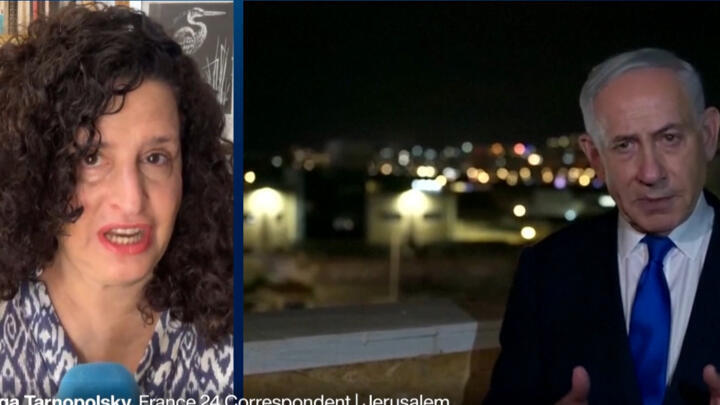
Reports show US and Israel are planning new strikes on Iran

French President Macron lands in Saudi Arabia on surprise ‘solidarity’ visit
Egypt mulls joining Saudi Arabia in war against Houthis

REPLAY: French president addresses fuel supplies during Gulf tour