


People expelled from the United States and sent to Equatorial Guinea testify to a daily life marked by intimidation and pressure from local authorities
Golden Page News| August 15 | 2026
Masked police officers broke into the hotel room of Ahmed Soliman, an Egyptian expelled from the United States and sent to Equatorial Guinea. They dragged him out, along with about twenty other deportees like him, weapons in hand, to send them a message:
“Some police officers were pulling me by the neck, trying to throw me to the ground, others were elbowing me in the back,” Ahmed Soliman, 30, said of the incident two weeks ago. “Machine guns pointed at our faces, all just to tell us that they are tired of seeing us here, in this country,” he recalls.
The Equatorial Guinean authorities are stepping up pressure on deportees held in a hotel in Malabo, the capital, which has become a veritable warehouse for immigrants deported from the United States, including Ahmed Soliman, who arrived in April.

The authoritarian Central African oil state has become a key transit point in US President Donald Trump’s policy of repressive migration, which involves sending people to “third countries” like Equatorial Guinea that the US cannot legally return to their home countries. Since November, Washington has deported at least 50 people, mostly Africans, to Equatorial Guinea. Twenty-seven of them remain in hotels, as Equatorial Guinea has deported some people to their countries of origin or to other states.

Conditions of detention in Malabo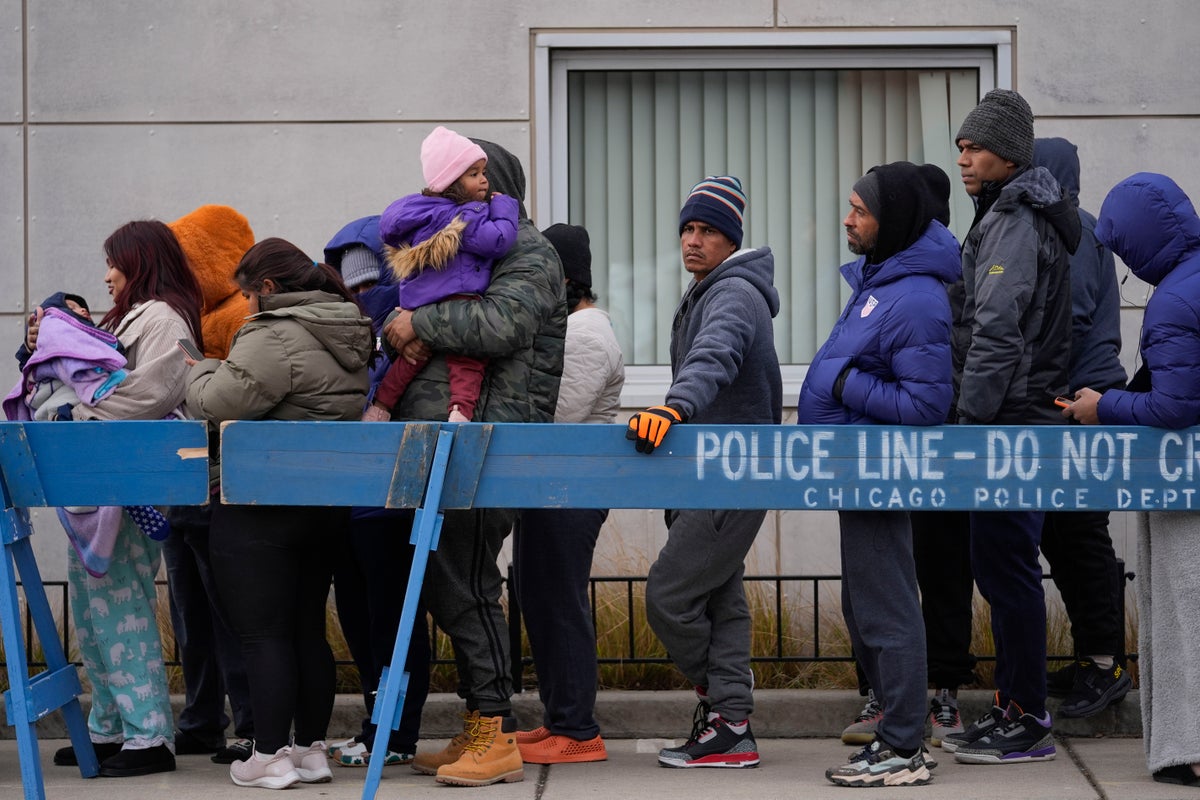
While their stay in the hotel, under the surveillance of armed guards, has dragged on for months, the authorities are getting impatient, said deportees, some of whom also say they are subjected to verbal and physical violence by the police. A local lawyer also confirmed that they were under pressure to return to their home country.
“Every time a problem arises, every time we demand our rights, they tell us, ‘Listen, if you don’t like it, go back to your country,'” said Ahmed Soliman, who had lived in the United States since the age of three and fears returning to his native Egypt because of his homosexuality.
Those deported are not allowed to apply for asylum in Equatorial Guinea, but they say they cannot leave because they fear for their lives in their home country and because they no longer have passports.
Petagaye, a 35-year-old Jamaican who arrived at the hotel in June, recounts the threats “every day”. “They tell you, ‘Oh, you have to go back to your country,’ or they say, ‘Oh, go kill yourself, because the United States doesn’t care.'”
Previously, deportees could walk around the hotel and sometimes had a police escort to a local grocery store, often in exchange for a few dollars, but this practice has also been repressed, said one deportee who gave his name as Him.
“They are trying to intimidate you,” says the 40-year-old Eritrean who fled his war-torn country and was granted refugee status in the United States at the age of 13.
Neither the U.S. State Department nor Equatorial Guinea’s national security minister responded to requests for comment.
Evolution of the legal framework for evictions
In July, the deportees panicked when a guard told them that an Ebola patient was staying in the hotel. Videos were transmitted showing men in protective suits walking through the building. Authorities have not commented on the incident and Equatorial Guinea has not reported any cases of Ebola.
The three deportees interviewed had lived in the United States since childhood and spoke with an American accent. All three had been granted protection measures against deportation preventing them from being returned to their country of origin, as judges ruled that their lives would be in danger there.
Under previous administrations, people with such protections, although legally less robust than refugee status, were allowed to work and live legally in the United States. The Trump administration has argued that it can still deport them, as long as it does not send them back to their home countries.
In June, a lawsuit was filed with the African Commission on Human and Peoples’ Rights, the continent’s highest human rights body, in an attempt to halt US deportations to Equatorial Guinea. For the time being, the evictions continue: ten more people arrived on 30 July in Malabo.