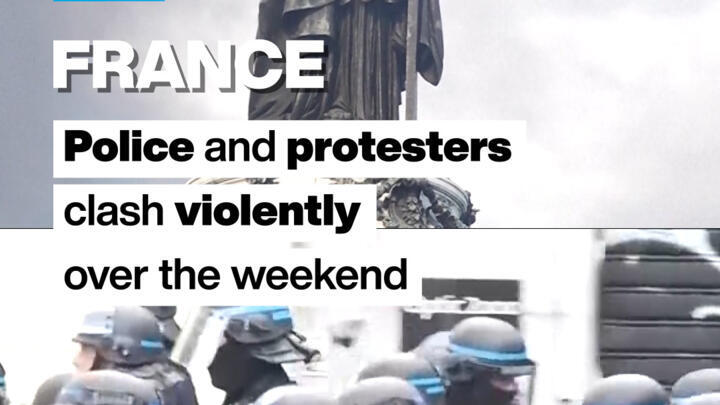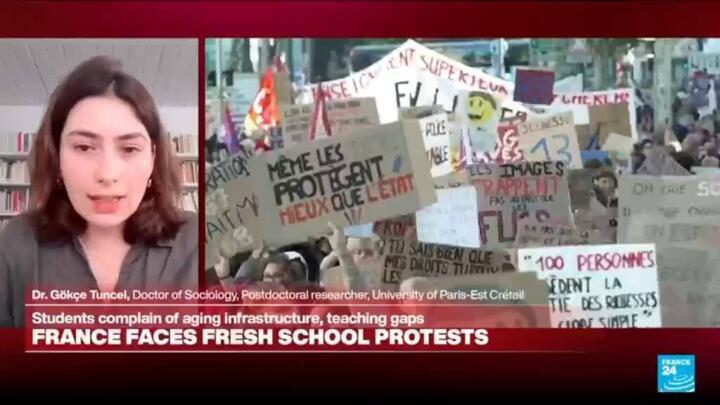


Prime minister accuses ultra-left networks of seeking to destabilise France as protests over living costs and public services descend into violence
PARIS, France — 19 October 2026 — France is facing a new period of political and social tension after nationwide demonstrations over the rising cost of living, fuel prices, education and public services escalated into violent clashes, looting and arson in several cities.
Prime Minister Sébastien Lecornu on Monday accused what he described as the “ultra-left movement” of attempting to exploit the unrest and “orchestrate deep unrest across the country” ahead of France’s 2027 presidential election.
Speaking after a crisis meeting with President Emmanuel Macron and senior government officials, Lecornu warned that a network of groups could seek to turn social mobilisation into a wider challenge to public order and, potentially, the electoral timetable itself.
The government’s warning comes after one of the most serious episodes of civil unrest France has experienced in recent years.

From demonstrations to violence
The protests on 17 October brought together several strands of public discontent.

Students and young people have been protesting over deteriorating school conditions and education policy, while wider demonstrations have focused on rising living costs, fuel prices, wages, pensions and concerns about the decline of public services.
According to figures reported by French authorities, around 550,000 people participated in demonstrations across the country, while organisers put the figure considerably higher, at approximately 800,000.
The majority of demonstrations were peaceful. However, violence broke out on the margins of several marches.
Paris witnessed extensive looting and damage to businesses. In Marseille and Lyon, public buildings and businesses were attacked, while in Limoges, the historic city hall was set on fire. Violence was also reported in other cities, including Bordeaux.
The scale of the unrest placed significant pressure on police and gendarmerie forces.
By Monday, authorities were reporting approximately 2,400 arrests, while hundreds of police officers and other members of the security forces had been injured. Reuters reported that more than 1,000 police officers had suffered injuries during the unrest.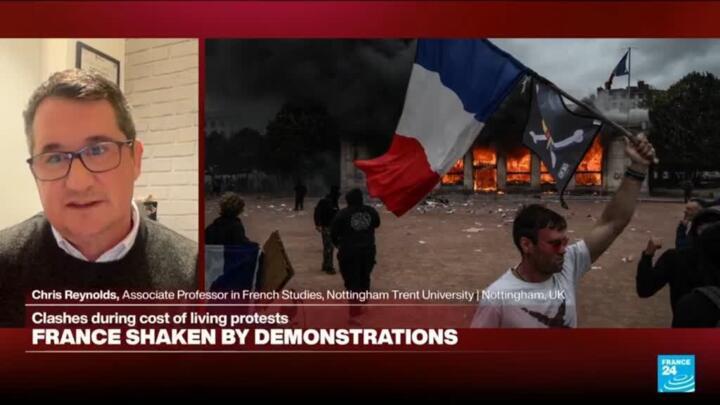
Lecornu’s ultra-left accusation
The French government’s response has increasingly focused on groups it describes as belonging to the radical or ultra-left political milieu.
Lecornu argued that the violence was not simply spontaneous anger spilling over from peaceful demonstrations. He accused organised networks of seeking to exploit existing social frustrations to create prolonged instability.
The prime minister’s warning is particularly significant because France is approaching the 2027 presidential election, a contest that will take place after Macron’s second presidential term.
“There is a whole network that could be mobilised,” Lecornu said, warning that unrest could potentially be used to challenge the country’s political and electoral timetable.
President Macron has also condemned the violence and called for those responsible for criminal acts to be brought to justice.
But the government’s interpretation has already become part of a wider political dispute.
Not everyone accepts the government’s explanation
While the government has blamed ultra-left groups for much of the violence, the available evidence does not establish that all — or even most — of those involved were politically organised extremists.
Paris prosecutor Laure Beccuau reportedly said she could not confirm that the people responsible for the violence in the capital were politically aligned with the ultra-left.
That distinction is important.
The demonstrations involved hundreds of thousands of people with different grievances and political backgrounds. Some participants were students, trade unionists and people protesting against economic pressures, while other groups appeared to be involved primarily in vandalism, looting or clashes with police.
The violence therefore cannot automatically be attributed to every person who participated in the demonstrations.
The economic pressure behind the protests
At the heart of the mobilisation is a broader question about the cost of living in France.
Rising fuel prices have added pressure to households and businesses already dealing with increased expenses. Education has become another major source of frustration, particularly among students and young people who say schools and educational institutions are struggling with inadequate resources.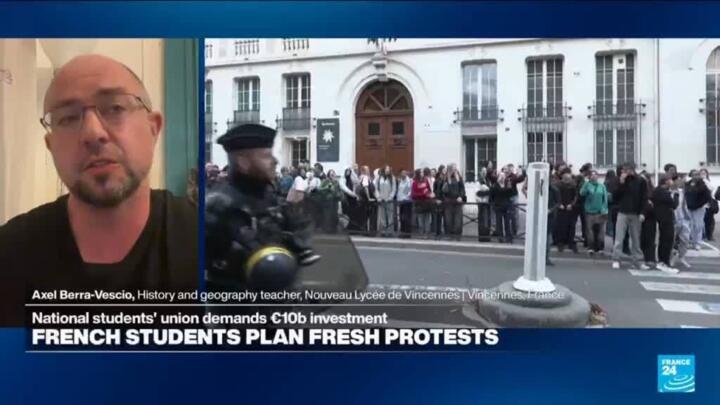
The protests have also revived memories of the Yellow Vest movement, which began in 2018 around fuel taxation and developed into a much broader revolt over inequality, purchasing power and political representation.
The latest mobilisation has brought some of those concerns back into the streets — but under very different political circumstances.
A government under pressure
The unrest has also exposed questions about the government’s ability to anticipate large-scale demonstrations.
Interior Minister Laurent Nuñez offered his resignation following criticism of the security response, but President Macron rejected the offer and instructed him to remain in office.
Authorities have acknowledged serious difficulties in anticipating the scale and speed of the mobilisation.
Reports indicate that police forces were stretched in several cities as demonstrations grew beyond initial expectations and smaller groups moved into areas where businesses and public buildings became targets.
The government has therefore moved towards targeted measures rather than immediately imposing a nationwide state of emergency.
Lecornu called for limited and localised curfews in areas affected by violence and said the government would increase the deployment of police and gendarmes.
He has also left open the possibility of stronger emergency measures if the situation deteriorates.
Businesses caught in the middle

For thousands of French business owners, the protests have become a question of survival.
Small shops, cafés, restaurants, salons, supermarkets and other businesses were among those affected by looting and vandalism.
In Paris, some business owners reported severe financial losses after stores were broken into and merchandise was stolen. Some businesses described scenes of smashed windows, fires and extensive property damage.
The damage also raises concerns about insurance, employment and the ability of small businesses to recover.
The government has indicated that support measures will be made available to businesses affected by the violence.
The political stakes of 2027
The timing of the unrest gives the crisis an additional political dimension.
France is now entering the political period leading towards the 2027 presidential election, when Macron will no longer be eligible to seek another consecutive term.
The country’s political landscape is already highly fragmented, with strong competition between the political left, centre and right.
The Rassemblement National and other right-wing forces have seized on the violence to argue for stronger policing and tougher measures against rioters.
On the left, politicians have emphasised the legitimate economic and social grievances behind the demonstrations while also condemning looting and violence.
This creates a difficult political dilemma for the government: restoring public order without appearing to dismiss the underlying reasons that brought hundreds of thousands of people onto the streets.
France’s democratic test
The central question now is whether France can separate legitimate protest from criminal violence.
The right to demonstrate is an important part of French democratic life. At the same time, attacks on police officers, the destruction of public buildings, arson and the looting of private businesses are criminal acts that cannot be justified simply because they occur during a political demonstration.
The government faces the challenge of restoring security while maintaining public confidence in democratic institutions.
At the same time, political leaders must address the grievances that are driving people onto the streets if they want to prevent further escalation.
Simply deploying more police may contain individual outbreaks of violence, but it will not by itself resolve concerns about purchasing power, education, fuel costs, public services or political representation.
A warning for the months ahead
France’s current crisis is therefore larger than a single weekend of riots.
It represents the convergence of economic anxiety, youth frustration, political polarisation and declining confidence in institutions — with organised political movements and opportunistic groups operating within the same protest environment.
Lecornu’s warning about an ultra-left campaign to destabilise France will now become part of the political debate surrounding the 2027 election.
But establishing who organised the violence, what their political motivations were, and how much of the unrest was spontaneous will require evidence rather than political accusation.
For now, France faces a difficult balancing act: protecting public order, preserving the right to peaceful protest, supporting businesses affected by violence and addressing the economic and social grievances driving the mobilisation.
With the 2027 presidential election approaching, the government’s handling of the crisis could become one of the defining political tests of the period ahead.
Golden Page News | France.