


As artificial intelligence moves from laboratories into classrooms, workplaces, governments, newsrooms and homes, a new global question is emerging: can humanity remain in control of a technology it does not fully understand?
Golden Page News |August 18, 2026
Technology | Society | Human Rights | Global Affairs
Artificial intelligence is no longer a distant technology waiting somewhere in the future.
It is already here.
It writes documents, translates languages, generates images, assists doctors, recommends what people watch, helps businesses make decisions, supports students in classrooms and increasingly participates in the production of news, entertainment and culture. AI is becoming part of the infrastructure of modern life.

But behind the excitement surrounding increasingly powerful machines lies a question that may ultimately be more important than how intelligent AI becomes:

Who gets to understand, influence and control the technology that is transforming human society?
That question sits at the heart of the growing argument that understanding artificial intelligence should be treated as a human-rights issue.
The phrase has been associated with technology entrepreneur and musician will.i.am, whose work through AI education initiatives has increasingly focused on ensuring that ordinary people, particularly young people and underserved communities, are not merely consumers of artificial intelligence but participants in shaping its future.
At the 2026 AI for Good Global Summit in Geneva, will.i.am, serving as a Goodwill Ambassador for the International Telecommunication Union’s AI Skills Coalition, promoted the idea that the future of AI should not be shaped by a select few but opened to everyone.
The proposition is deceptively simple:
If AI is going to influence human lives, humans must understand it.
And that argument is gaining support far beyond the technology industry.
AI Did Not Build Itself
Artificial intelligence can sometimes appear almost mysterious.
A person asks a question and a machine produces an answer. A photograph can be transformed within seconds. A voice can be recreated. A computer can analyse enormous quantities of information and identify patterns that would take humans years to discover.
The technology can therefore create the impression that an independent intelligence has entered society.
But AI did not arrive by itself.
Humans built it.
Humans designed the algorithms. Humans constructed the computing infrastructure. Humans selected or generated training data. Humans decided what problems the systems should solve. Humans determined how the systems would be deployed and, crucially, humans decided who would have access to them.
Even when an AI system produces an unexpected result, responsibility does not disappear simply because a machine produced the output.
UNESCO’s global Recommendation on the Ethics of Artificial Intelligence makes this principle explicit: AI systems should not displace ultimate human responsibility and accountability. The organisation calls for human oversight, transparency, fairness, accountability and respect for human rights throughout the AI lifecycle.
That leads to a profound conclusion:
If AI is a human creation, then the future of AI is ultimately a question about human choices.
The Knowledge Gap Could Become a Power Gap
The greatest danger may not be that machines become smarter than people.
It may be that some people understand the machines far better than everyone else.
A relatively small group of engineers, technology companies, investors, governments and institutions currently possesses much of the technical knowledge and infrastructure necessary to develop and deploy advanced AI.
Meanwhile, billions of people are becoming users of AI systems without necessarily understanding how those systems work or how they affect the decisions made about them.
That creates a potential imbalance of power.
A person may encounter an AI system when applying for employment, seeking credit, accessing public services, interacting with a digital platform or consuming information online.
But if that individual does not know that AI is involved — or does not understand what data is being used, how the system reached its conclusion or how to challenge an automated decision — meaningful human agency becomes difficult.
UNESCO specifically calls for public understanding of AI and data through accessible education, civic engagement, digital skills, AI ethics training and media literacy. Its stated objective is to enable people to make informed decisions about AI and protect themselves from undue influence.
This is where AI literacy becomes more than a technical skill.
It becomes a question of power.
From Knowing How to Use AI to Knowing How AI Uses Us
The first generation of digital literacy taught people how to operate computers.
The next generation taught people how to use the internet and social media.
The AI era demands something deeper.
People must learn not only how to use AI, but also how AI affects them.
That means understanding concepts such as data collection, algorithmic bias, automated decision-making, privacy, recommendation systems, deepfakes, synthetic media, AI-generated misinformation and algorithmic profiling.
It also means asking who benefits from a particular AI system and who carries the risk.
A person does not need to become a computer scientist.
But a citizen living in an AI-driven society should increasingly be able to ask:
Where did this answer come from?
What data influenced it?
Can it be wrong?
Who designed the system?
Who owns the data?
Who profits from it?
Can I challenge its decision?
And what happens when the machine is wrong?
These questions may become as important in the 21st century as knowing how to read a contract or understand a bank statement.
Europe Is Already Turning AI Literacy Into Policy
The argument is no longer purely philosophical.
In the European Union, AI literacy has become part of the regulatory framework surrounding artificial intelligence.
The European Commission says the AI Act’s Article 4 requires providers and deployers of AI systems to take measures to promote sufficient AI literacy among their staff and others operating AI systems on their behalf. The provision has applied since February 2025, with further developments to the framework in 2026.
The EU approach also recognises that people affected by AI need meaningful protection.
For high-risk AI systems, human oversight must be designed into the system. Humans overseeing such systems must be able to understand their capabilities and limitations, interpret their outputs and, where necessary, disregard or override them.
The EU’s own explanation of AI literacy goes even further, saying that affected people need sufficient knowledge to understand how decisions made with AI assistance can affect them.
This is significant.
It means the debate is moving from:
“Can AI do this?”
to:
“What does a human being need to know when AI does this?”
The Workplace: Who Owns the Future of Work?
Few areas illustrate the human-rights implications of AI more clearly than employment.
AI can automate tasks, analyse applications, assist workers and create new professions.
But it can also eliminate certain roles, change skill requirements and give employers new tools for monitoring and evaluating workers.
The question is not simply whether AI will create or destroy jobs.
It is:
Who gets to decide how the transition happens?
A worker who understands AI may be able to use it to increase productivity, acquire new skills and create new opportunities.
A worker who does not understand AI may experience the technology only as something imposed from above.
That difference could deepen existing inequalities.
Workers in wealthy economies with access to education, computing resources and training may adapt more quickly, while workers in poorer countries or disadvantaged communities could find themselves on the wrong side of a rapidly changing global labour market.
AI literacy, therefore, cannot become a luxury available only to those who can afford expensive courses and high-end technology.
If AI becomes fundamental to economic participation, access to AI knowledge becomes an issue of social inclusion.
Africa and the Global South Cannot Be Left Behind
This question is particularly important for Africa.
The continent has enormous potential to use AI in healthcare, education, agriculture, financial services, public administration and entrepreneurship.
But the AI revolution also creates the possibility of a new form of technological dependency.
If Africa becomes primarily a consumer of AI systems designed elsewhere, trained predominantly on data and cultural assumptions from elsewhere, important decisions about African societies could increasingly be influenced by technologies over which Africans have limited control.
UNESCO has warned about the underrepresentation of low- and middle-income countries in global AI ethics discussions and the danger that local knowledge, cultural pluralism and different value systems may be neglected.
That raises a question of digital sovereignty:
Will African societies merely use artificial intelligence, or will they help define what artificial intelligence means for Africa?
Language is one example.
Africa contains thousands of languages, but many digital technologies have historically been developed around a comparatively small number of dominant languages.
If AI systems understand some cultures better than others, the technology could unintentionally reproduce existing inequalities.
AI literacy therefore needs to include cultural literacy.
The world does not need only more people who can code AI.
It needs people who can ask whether AI reflects the societies it is supposed to serve.
The Danger of Algorithmic Dependence
There is another danger that receives less attention.
People may gradually stop questioning machines.
A recommendation becomes a decision.
A prediction becomes a fact.
A generated answer becomes knowledge.
A computer-generated ranking becomes a judgment.
This is known as automation bias — the tendency to place excessive trust in automated systems.
The EU AI Act explicitly recognises the danger of over-reliance on AI outputs and requires human oversight mechanisms for high-risk systems to account for it.
The danger is not that people will suddenly surrender control to robots.
It could happen much more quietly.
People may simply become accustomed to saying:
“The computer says so.”
That sentence could become one of the most dangerous phrases of the AI age.
Because behind every computer system are human decisions, institutional interests, datasets, assumptions and design choices.
A machine’s output is not automatically neutral simply because it is mathematical.
AI and Democracy
The implications extend into politics.
AI can generate political messages, manipulate images, clone voices, create convincing videos and personalise information at enormous scale.
That means the technology can potentially strengthen democratic participation — but it can also make manipulation cheaper and faster.
A citizen who cannot distinguish authentic information from synthetic content becomes more vulnerable to manipulation.
AI literacy therefore becomes part of media literacy.
UNESCO’s framework specifically links public AI awareness with media and information literacy and protection against misinformation, disinformation and undue influence.
The question for democracy is no longer simply whether people have access to information.
It is whether they can determine:
What is real?
Who created it?
Why was it shown to me?
Was it generated or manipulated?
And what does someone want me to believe or do because I saw it?
Data Could Become the New Battleground
There is another dimension to the debate: ownership.
Every time people use digital platforms, they produce data.
Searches, purchases, photographs, locations, conversations, preferences and interactions can all become part of the digital record.
AI makes such information increasingly valuable.
will.i.am has increasingly framed data ownership as a major issue in the AI era, arguing that people should retain meaningful control over their digital identities and the data they generate. His recent public discussions have connected data ownership with human agency, governance and the possibility of digital rights.
The question is profound:
If your data helps create the intelligence that powers an enormous commercial system, what rights should you have over that data?
And if a person’s voice, face, creative work or personal history can be reproduced by AI, where does ownership begin and end?
These questions are still being fought over by governments, courts, companies, artists and citizens.
The Human Being Must Remain at the Centre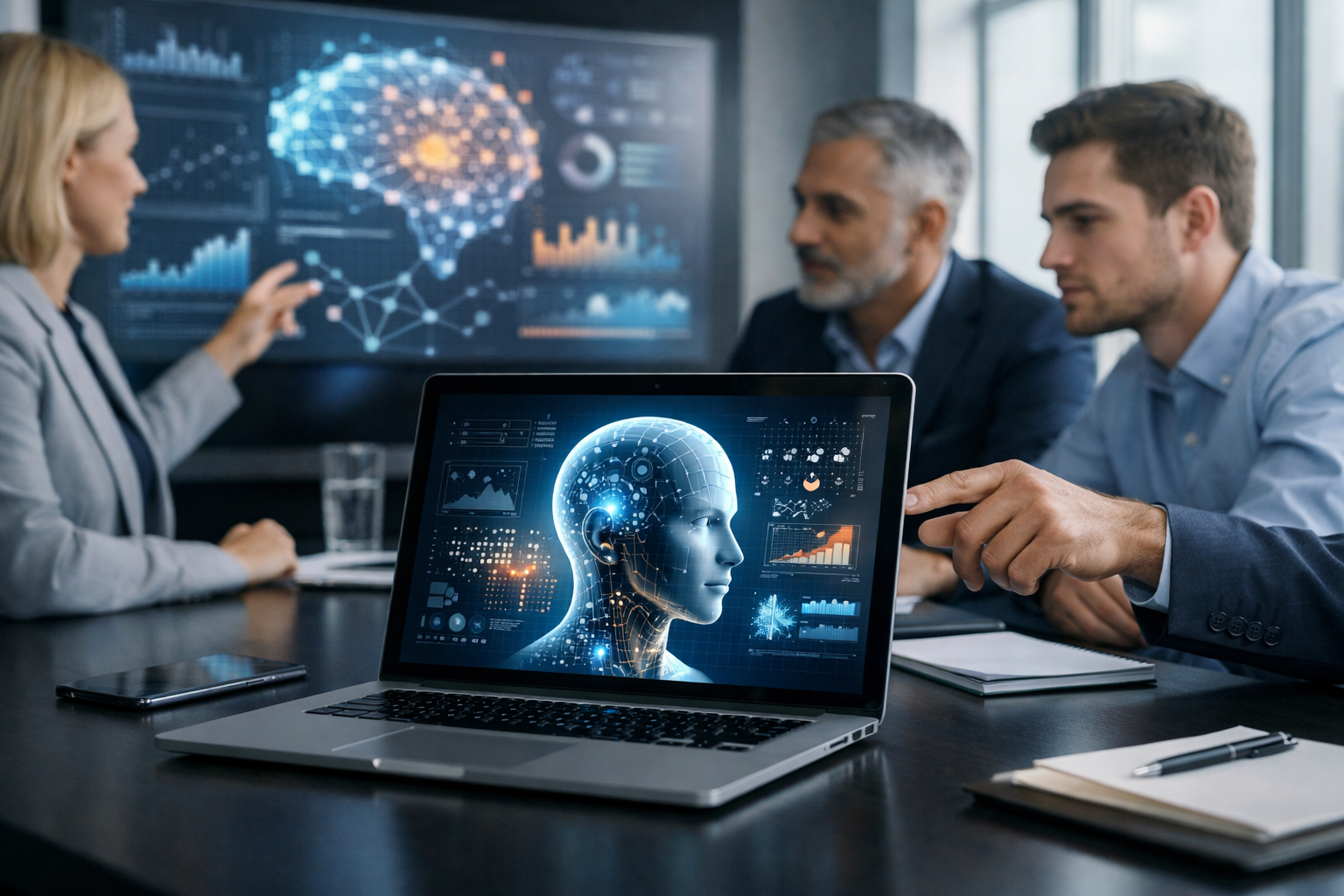
The strongest argument for AI literacy is not anti-technology.
It is precisely the opposite.
Human beings should understand AI because AI can be enormously beneficial.
UNESCO points to potential benefits ranging from healthcare and education to cultural preservation and other areas of human development.
The challenge is ensuring that technological progress does not become detached from human values.
The question should not be:
Humanity versus AI.
It should be:
AI for humanity.
That distinction is also visible in will.i.am’s current public advocacy. His work with the ITU’s AI Skills Coalition focuses on expanding access to AI education and ensuring that people, especially young people and underserved communities, have the skills to participate in an AI-driven economy.
The objective is not to stop artificial intelligence.
It is to prevent the future from being designed without the people who will have to live in it.
Is Understanding AI Really a Human Right?
There is an important legal distinction.
At present, it would be inaccurate to claim that international law universally recognises “the right to understand AI” as a standalone human right.
But the principle behind the statement is increasingly embedded in human-rights-oriented AI governance.
UNESCO’s global AI ethics framework explicitly calls for awareness and literacy, human oversight, transparency, accountability, fairness and protection of fundamental rights.
The European Union has incorporated AI literacy into its regulatory framework.
And technology leaders and advocates are increasingly arguing that knowledge about AI should not remain concentrated among engineers, corporations and governments.
So perhaps the more precise question is not:
“Is understanding AI already a legally recognised human right?”
It is:
“Can people meaningfully exercise their existing human rights in an AI-driven society if they do not understand the technology influencing their lives?”
That is a much harder question.
And increasingly, the answer appears to be no.
A New Digital Social Contract
The AI revolution may therefore require something larger than regulation.
It may require a new social contract between technology and society.
Governments must create rules that protect citizens.
Technology companies must accept responsibility for the systems they develop and deploy.
Schools must teach AI literacy.
Universities must combine technical knowledge with ethics, humanities and social sciences.
Journalists must understand how AI-generated information is produced and manipulated.
Workers must receive opportunities to adapt.
Citizens must learn how to question AI rather than blindly trust it.
And communities must have a voice in determining which technologies are introduced into their schools, workplaces, hospitals and public institutions.
UNESCO’s framework explicitly advocates broad participation in AI governance and calls for education and public engagement so that people can make informed decisions.
The future of AI should therefore not belong exclusively to those who build the machines.
It should belong to the societies that must live with them.
The Question Humanity Cannot Avoid
Artificial intelligence may eventually become extraordinarily sophisticated.
It may write better, calculate faster, analyse deeper and produce information at a scale no human institution has ever experienced.
But none of that changes its origin.
AI is a human creation.
Its algorithms are human creations.
Its datasets are collected through human systems.
Its objectives are determined by humans.
Its infrastructure is financed and controlled by human institutions.
Its deployment is authorised by humans.
And its consequences are ultimately experienced by human beings.
That means the greatest AI question may never actually be about machines.
It may be about power.
Who has it?
Who understands it?
Who benefits from it?
Who is protected from it?
Who is excluded?
Who owns the data?
Who makes the rules?
And, ultimately:
Who gets to decide what kind of future artificial intelligence will create?
The answer cannot reasonably be left to machines.
Because machines did not choose to build themselves.
We did.
And if humanity built artificial intelligence, then humanity must also accept the responsibility of understanding it, governing it and ensuring that it remains a tool for human development rather than a mechanism through which a small part of humanity gains unprecedented power over everyone else.
That may be the real meaning behind the emerging declaration:
Understanding AI is not merely about learning technology. It is about preserving human agency in an AI-driven world.
Golden Page News | Featured Story
Technology • Society • Human Rights • Global Affairs