


JOHANNESBURG, South Africa — President Cyril Ramaphosa has condemned the recent mistreatment of African foreign nationals in South Africa, saying the country should be “deeply concerned and ashamed” that people from neighbouring and other African nations have been threatened with violence and forced to leave.
Golden Page News| August 16|2026
Ramaphosa’s remarks come amid a surge in anti-immigrant protests and attacks across parts of South Africa. In recent months, migrants from countries including Zimbabwe, Malawi, Mozambique, Nigeria and Ghana have faced threats, attacks and pressure to leave, with some returning home because they feared for their safety.
The president said the treatment of foreign nationals was fundamentally at odds with the spirit of African solidarity and regional integration.
“We cannot preach integration and summit and practice exclusion in the streets of our countries,” Ramaphosa said, addressing South Africans and challenging communities to confront violence and intolerance against people from other African countries.

The latest wave of violence has placed particular pressure on South Africa’s relations with its African neighbours. Nigeria, for example, has said that nearly 1,500 Nigerians have been evacuated from South Africa following the recent violence. Nigerian officials have also reported that both undocumented migrants and Nigerians legally residing in the country have been targeted.

In some communities, anti-immigrant groups have issued demands for undocumented foreigners to leave, while reports have emerged of armed groups attacking migrant households and ordering residents to return to their countries. Human Rights Watch has described recent attacks against African and Asian foreign nationals as violent xenophobic attacks and raised concerns about the response of police and other authorities.
The scale of the departures has been substantial. According to figures compiled from the governments of migrants’ home countries, more than 178,000 African immigrants have left South Africa in recent months. The departures include people who were deported as well as much larger numbers who returned voluntarily or through repatriation programmes.
Zimbabwe alone has reported more than 115,000 of its nationals returning from South Africa since late May, while Malawi has reported more than 56,000 returns. Nigeria, Ghana, Mozambique and Lesotho have also reported significant numbers of citizens returning from South Africa.
The violence has also created economic consequences inside South Africa. In KwaZulu-Natal, some clothing factories have reported losing between 12% and 19% of their workforces after migrant workers fled amid the protests. The disruption has left factories struggling to fill positions and highlighted the extent to which foreign workers are integrated into parts of the South African economy.
South Africa has simultaneously maintained that it has the right to enforce its immigration laws. In a June address, Ramaphosa stressed that irregular migration could not simply be ignored and that the government would strengthen immigration enforcement. But he also said that protecting human rights applies to everyone in South Africa, whether citizens or foreign nationals, and that enforcement of immigration law is the responsibility of the state rather than vigilante groups.
That distinction has become central to the debate. South Africans have legitimate concerns about unemployment, crime, undocumented migration and pressure on public services, but critics argue that migrants are increasingly being blamed for problems that have much deeper economic and political causes.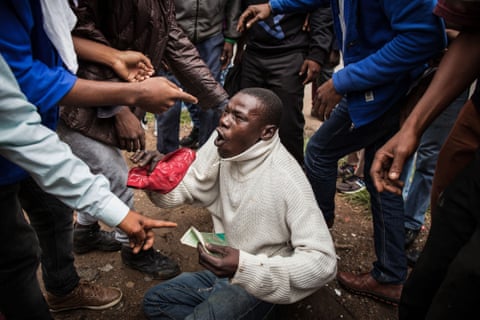
The recent violence has also generated diplomatic fallout. Nigeria has urged South Africa to do more to protect its citizens, warning that repeated attacks are damaging relations between the two countries. Separately, two Ghanaian nationals have petitioned the International Criminal Court over what they describe as a pattern of widespread and systematic attacks against foreign nationals. South Africa has rejected the petition as opportunistic and pointed to its domestic legal protections against discrimination.
For Ramaphosa, however, the issue extends beyond immigration policy. It touches the very idea of an African community built on cooperation, shared history and solidarity.
His warning to South Africans is therefore both domestic and continental: a country cannot demand respect for its citizens abroad while allowing citizens of neighbouring countries to be intimidated, attacked or driven from their homes at home.
As African leaders continue to pursue regional integration, the treatment of migrants in South Africa presents a difficult contradiction—one that threatens not only individual lives and livelihoods but also the trust that underpins relations among African nations.