


Tensions Rise in Strait of Hormuz After Three Tankers Targeted in 24 Hours
Golden Page News | August 15, 2026
The United Arab Emirates has accused Iran of targeting three tankers linked to state energy company ADNOC, raising fresh concerns over shipping security and global energy supplies.
ABU DHABI — Tensions around the Strait of Hormuz have intensified after three oil tankers linked to the United Arab Emirates’ state-owned energy company ADNOC were reportedly targeted within a 24-hour period.
Two vessels were attacked on Thursday evening, followed by a third incident on Friday evening. The United Arab Emirates has blamed Iran for the attacks, while Iranian authorities have rejected accusations that the country is responsible.
No deaths or significant damage have been reported in connection with the three incidents.

The developments come amid an escalating confrontation between Iran and the United States that has placed the strategically important waterway at the centre of the wider regional crisis.

UAE condemns attacks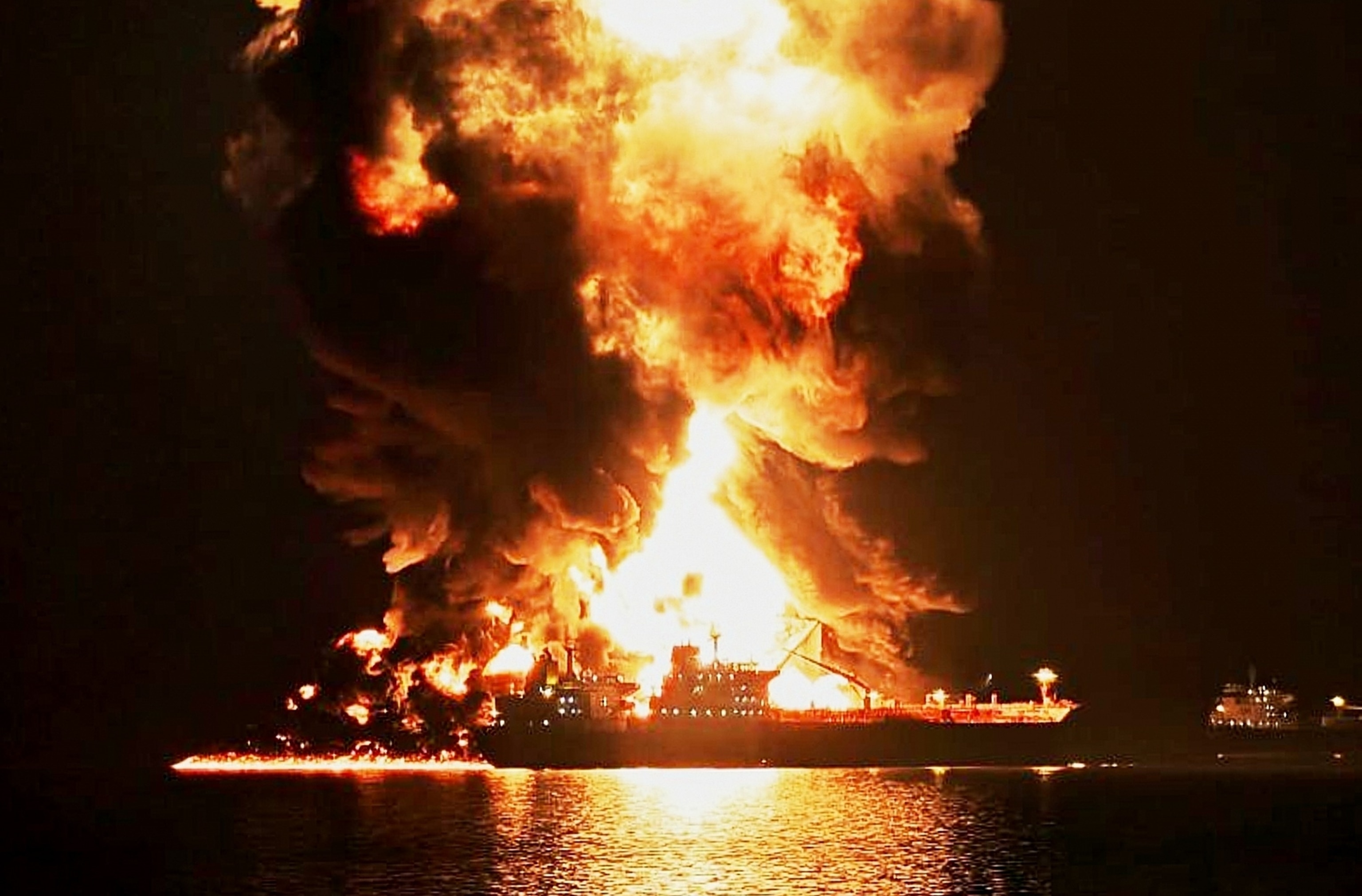
The UAE Ministry of Foreign Affairs strongly condemned what it described as an Iranian attack against an ADNOC-linked vessel.
In a statement, the ministry accused Iran’s Islamic Revolutionary Guard Corps of using commercial shipping and the Strait of Hormuz as a means of economic pressure.
The UAE said attacks against merchant vessels represent a threat not only to regional stability but also to international energy security.
The Emirati government has reiterated its position that commercial vessels must be allowed to navigate the waterway freely under international law.
Why the Strait of Hormuz matters
The Strait of Hormuz is one of the world’s most strategically important maritime routes.
The narrow passage connects the Persian Gulf with the Gulf of Oman and the Indian Ocean, providing a vital route for energy exports from several major oil-producing countries.
Before the current conflict, approximately one-fifth of the world’s oil supply passed through the strait.
Any prolonged disruption could therefore have consequences well beyond the Middle East, potentially affecting global oil prices, transportation costs, inflation and energy security.
For countries heavily dependent on imported energy, continued instability in the waterway could become an increasingly serious economic concern.
Iran demands conditions for reopening the waterway
Iran has effectively restricted passage through the Strait of Hormuz since the beginning of the current regional conflict.
Iranian officials have previously linked the reopening of the waterway to a series of political and military conditions, including an end to what Tehran describes as aggression against Iran and its allies in Lebanon, Palestine, Yemen and Iraq.
Iran has also demanded an end to the US naval blockade affecting Iranian ports.
The United States, meanwhile, has maintained pressure on Iran as the wider conflict continues.
Ceasefire under pressure
The latest incidents have added further pressure to diplomatic efforts aimed at maintaining a ceasefire reached earlier this year.
International mediators have urged both sides to return to the terms of an agreement reached between Washington and Tehran in June.
The repeated incidents involving commercial shipping demonstrate how quickly regional military tensions can spill over into international trade.
For shipping companies and energy markets, the Strait of Hormuz has become a major security concern.
Trump comments add to tensions
US President Donald Trump has also made controversial comments concerning the strategic waterway, including a statement that the Strait of Hormuz would eventually become American territory.
Iran has dismissed such claims as false and rejected any suggestion that the waterway could become US territory.
The comments have added another layer to an already tense confrontation between Washington and Tehran.
Global energy markets watching closely
The immediate concern for international markets is whether the attacks represent isolated incidents or the beginning of a sustained campaign against commercial shipping.
If vessels become increasingly reluctant to use the Strait of Hormuz, shipping companies could be forced to consider alternative routes, potentially increasing transportation times and costs.
A prolonged disruption could also place additional pressure on oil supplies and energy prices around the world.

The latest developments demonstrate how a conflict involving a relatively narrow geographical area can have consequences for people and businesses thousands of kilometres away.
The Strait of Hormuz is not simply a Middle Eastern waterway. It is a critical artery for the global economy.
For consumers, businesses and governments already dealing with economic uncertainty, any prolonged disruption to energy supplies could mean higher fuel, transportation and production costs.
The international community will therefore be watching closely for signs of further attacks, diplomatic progress or a broader escalation.
We will continue to follow developments around the Strait of Hormuz and their potential impact on global energy security, international trade and the wider Middle East.