


Why the Next Chapter of Africa-Europe Relations May Begin with Paris and Abuja.
At first glance, France and Nigeria appear to have little in common.
One is a European power with centuries of influence in global diplomacy, culture, and economics. The other is Africa’s most populous nation, a country of immense energy, talent, and entrepreneurial spirit that continues to search for its full potential on the world stage. Yet beneath their differences lies a powerful reality, the futures of France and Nigeria are becoming increasingly interconnected.
As the world confronts economic uncertainty, migration pressures, climate challenges, technological disruption, and shifting geopolitical alliances, the relationship between Europe and Africa is no longer a matter of foreign policy alone. It is a matter of shared destiny. France is home to one of Europe’s largest African diaspora communities.
Thousands of Nigerians study, work, and build businesses across France each year. At the same time, French companies continue to expand their presence across Africa, seeking opportunities in telecommunications, energy, infrastructure, finance, agriculture, and technology. The connection is not merely economic. It is human.
Young Africans increasingly view Europe as a partner in education, innovation, and investment. Likewise, European leaders recognize that Africa’s young population represents one of the greatest economic opportunities of the 21st century.
By 2050, Africa is expected to account for a significant share of global population growth, creating both opportunities and challenges that Europe cannot ignore. Nigeria possesses what many economists describe as strategic advantages for future growth: A population of more than 200 million people. Vast natural resources. A growing technology sector. One of Africa’s largest consumer markets. A young and ambitious workforce. France brings different strengths. Advanced industrial capacity. Global diplomatic influence. World-class universities. Technological innovation. Access to European markets.
Together, these strengths suggest a partnership based not on aid but on mutual benefit. The conversation is gradually shifting from “How can Europe help Africa?” to “How can Africa and Europe grow together?”

Emmanuel Macron and the European Vision
French President Emmanuel Macron has consistently argued that Europe must redefine its relationship with Africa. Throughout his presidency, Macron has spoken about building partnerships based on investment, entrepreneurship, education, security cooperation, and sustainable development rather than traditional donor-recipient relationships.
His broader vision for Europe emphasizes strategic independence, innovation, economic competitiveness, and stronger international partnerships. For France, Africa is not merely a neighboring continent. It is an essential partner in shaping the future of global growth.
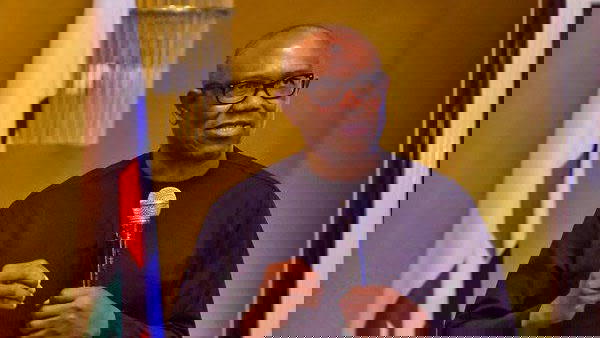
Peter Obi and the Nigerian Conversation
In Nigeria, one of the most prominent voices advocating economic transformation is Peter Obi.
Regardless of political affiliation or electoral outcomes, many observers agree that Obi has helped place governance, productivity, investment, education, and economic competitiveness at the center of national conversations. During recent engagements with members of the European Parliament and European officials, Obi argued that Europe’s future is closely linked to Africa’s success. He emphasized that a prosperous Nigeria would create opportunities not only for Nigerians but also for European businesses, investors, and trading partners.
He also urged European policymakers to view Africa not as a continent defined by poverty, but as a frontier for future growth and development. Although Macron and Obi come from different political systems, they share certain themes in their public messaging. Both frequently discuss: Economic productivity. Human capital development. Education. Innovation. International cooperation. Long-term investment.

Both have argued that nations must invest in people if they hope to achieve sustainable growth. Both have also emphasized the importance of institutions, governance, and leadership in national development. Their approaches differ, and their political contexts are not the same. Yet their discussions often converge around a central idea: prosperity is created through investment in people and productive economies.
Why Nigeria Matters to Europe
Nigeria’s importance extends beyond Africa. With its large population, growing market, and strategic location, Nigeria represents one of the continent’s most significant economic engines. A more prosperous Nigeria could contribute to: Increased trade between Africa and Europe. Expanded investment opportunities. Greater regional stability. Stronger technological collaboration. Reduced economic migration pressures.
This is one reason why discussions between Nigerian reform advocates and European policymakers are attracting increasing attention.
The success of Nigeria would not benefit Nigerians alone. It would generate opportunities across both continents. As Obi recently argued before European audiences, Africa’s progress and Europe’s prosperity are increasingly linked.

Beyond Aid: A Partnership of Equals
The future relationship between France and Nigeria may ultimately depend on abandoning outdated assumptions. The conversation is no longer about charity. It is about partnership. It is about recognizing that African development creates European opportunities and that European investment can accelerate African growth. In a world where economies are increasingly interconnected, neither continent can afford to ignore the other.
Whether viewed from Paris or Abuja, the challenges are significant. Economic reforms, governance improvements, infrastructure development, education, security, and job creation remain urgent priorities. Yet the opportunities are equally significant. France and Nigeria may differ in history, language, geography, and political systems, but they share a common interest in stability, growth, innovation, and prosperity. The next chapter of Africa-Europe relations will not be written by governments alone. It will be written by entrepreneurs, students, investors, researchers, workers, and citizens who recognize a simple truth: The success of one continent increasingly depends on the success of the other. And in that story, France and Nigeria may prove to be two of the most important partners of all.